OCR H446 A Level Computer Science · 1.5 Legal, Moral, Cultural and Ethical Issues
Stretch tasks Legal, Moral, Cultural and Ethical Issues
Quiz Challenge
A quiz game against four computer players, then short and long written answers.
- Quiz Blitz12 questions against the clock
- Quick Fire4 short answers
- Big Think2 long answers
About 20 minutes
This or That
Pixel the cat asks 8 questions. Each has two answers: pick the right one.
- Two answers to every question
- A fish treat for every right answer
- Streaks win Pixel shades, then a party hat
About 4 minutes
Memory Match
Flip the cards two at a time to match each term card to its meaning card.
- 12 cards: each term has a meaning
- One peek at every card
- Combo points for pairs found in a row
6 pairs, about 4 minutes
Sort It
Sort each statement into the right box, like the tick box tables in the exam.
- 12 cards to sort into 3 boxes
- Drag a card, tap a box or press its number
- Combo points for cards sorted in a row
12 cards, about 4 minutes
Code Word
Guess the lesson's secret words. Every guess shows which letters are right.
- A clue for every word
- Tiles turn green, amber or grey after each guess
- Fewer guesses win more points
3 words, about 4 minutes
Link Up
12 tiles hide 3 groups of 4. Work out what links them.
- Pick four tiles that belong together
- Four slips and the round is over
- Fewer slips win more points
3 groups, about 3 minutes
Bug Hunt
Two statements are true and one has a bug. Catch the bug before it gets away.
- Three statements in every round
- Tap the one with the mistake
- Streaks win bonus points
5 rounds, about 4 minutes
Brain games
Train your brain on this lesson
Logic, memory and speed, built from this lesson's own key ideas. Win up to three diamonds in each game.
Odd One Out
Four tiles: three share a link and one does not. Spot the odd one out, then see what links the rest.
- Three belong together, one does not
- A hint shows the link, for fewer points
- Quick answers and streaks win more
8 rounds, about 3 minutes
Memory Flash
Study the term cards, then they flip over. Find the card that goes with each clue, from memory.
- Three levels: 3, 4 and 6 cards
- Two tries to find each card
- Streaks win bonus points
3 levels, about 4 minutes
Fact or Fib
Statements fly in one at a time. Is each one a fact or a fib? Decide fast.
- Swipe, tap or use the arrow keys
- Every fib comes with its fix
- Streaks multiply your points
12 statements, about 3 minutes

The final challenge
City Run
Race a robot cat on inline skates through a neon cyber city, from Neon Station to the Hyper Tunnel. Every question is a row of neon gates across the tracks: skate through the one with the right answer, dodge the trains and barriers, and grab diamonds.
- 20 questions from this lesson, in four parts of the city
- Swipe, tap or use the arrow keys
- Dodge trains and holograms, and jump crates and cones
20 questions, about 6 minutes
Bonus challenge
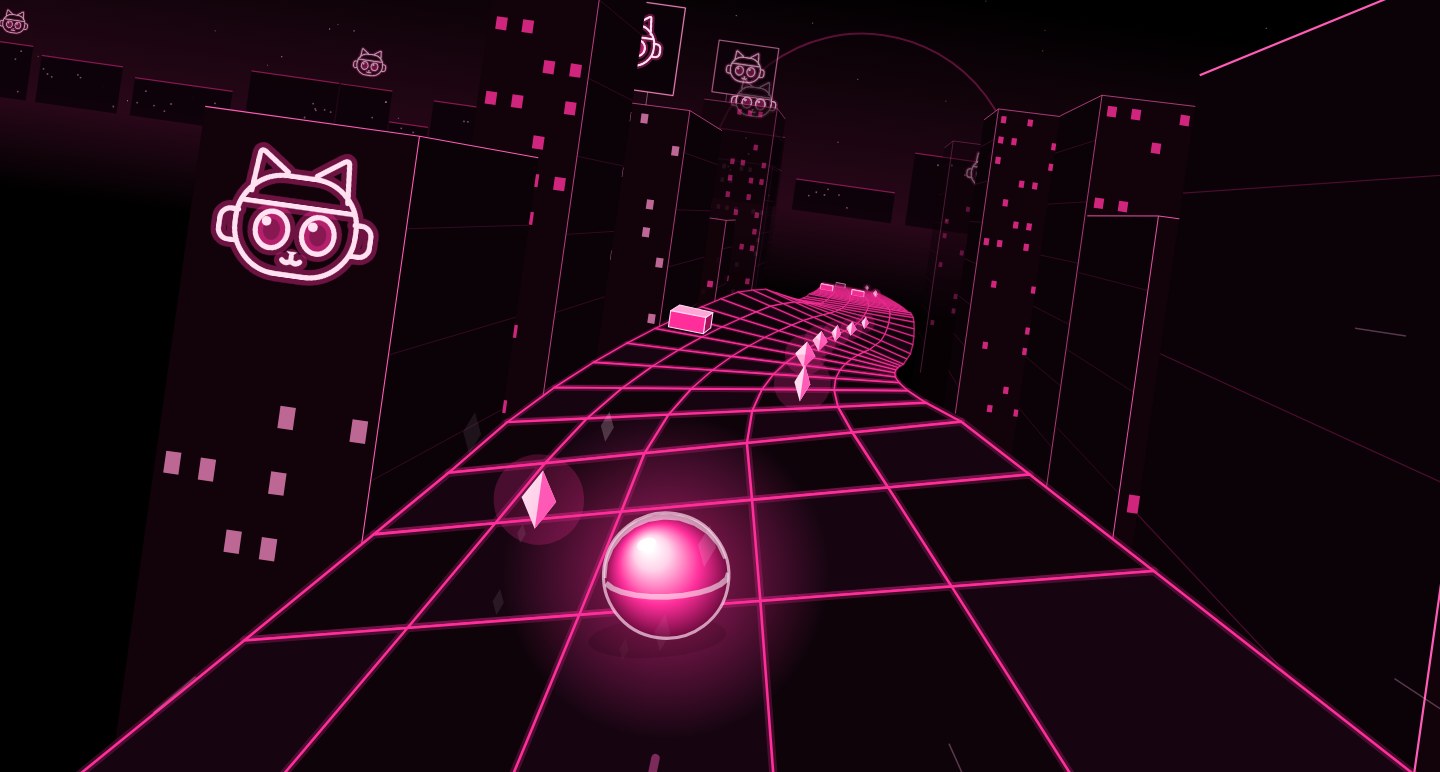
Neon Roll
Roll a glowing ball down an endless neon slope, past towers lit up with neon signs of Pixel the cat. Steer, jump the gaps and dodge the blocks. Questions from this lesson wait at gates along the way: every right answer keeps the ball rolling.
- Questions from this lesson at every gate
- Hold the arrow keys or a side of the slope to steer
- 8 right answers win two diamonds, 15 win three
Endless, about 5 minutes
The games need JavaScript. Every question is below, with the answers at the end.
Read the lesson: Legal, Moral, Cultural and Ethical Issues
Legal, Moral, Cultural and Ethical Issues: the questions
Quiz Challenge, round 1: Quiz Blitz
Which act makes spreading malware to impair a computer an offence?
- Computer Misuse Act 1990
- Data Protection Act 2018
- Copyright, Designs and Patents Act 1988
- Regulation of Investigatory Powers Act 2000
Which right lets a person ask an organisation to delete their personal data?
- Rectification
- Restriction
- Erasure
- Portability
Copyright arises automatically, but a patent must be applied for.
- True
- False
Which act governs the interception of communications by public bodies?
- Computer Misuse Act 1990
- Regulation of Investigatory Powers Act 2000
- Freedom of Information Act 2000
- Wireless Telegraphy Act 2006
Which THREE are offences under the Computer Misuse Act 1990?
Tick 3.
- Keeping personal data for too long
- Unauthorised access to computer material
- Unauthorised access with intent to commit further offences
- Unauthorised acts that impair a computer's operation
- Copying music without permission
What does an open source licence let users do?
- View, modify and redistribute the source code
- Only run the compiled program
- Sell the software as their own with no conditions
- Use the software for one year
Which ethical framework judges an action by its outcomes?
- Consequentialism
- Deontology
- Virtue ethics
Deontology says an action is right whenever its benefits outweigh its harms.
- True
- False
Which ethical framework asks what a person of good character would do?
Put the parts of a strong extended answer in order.
Number these 1 to 3.
- A conclusion that decides
- One sentence of context
- Three developed paragraphs
Why can an algorithm trained on historical data be unfair?
- Algorithms always favour the newest data
- Training removes every pattern from the data
- It can repeat the bias in that data while appearing objective
- Computers cannot store historical data
What is the digital divide?
- The gap between people with reliable access to technology and those without
- The split between hardware and software
- The difference between analogue and digital signals
- The border between two networks
Quiz Challenge, round 2: Quick Fire
Explain the difference between copyright and a patent. [2 marks]
Explain why naming an ethical framework improves an extended answer. [2 marks]
Describe what the Data Protection Act 2018 requires of organisations that hold personal data. [2 marks]
Give two reasons why automation can harm some workers even when it creates new jobs. [2 marks]
Quiz Challenge, round 3: Big Think
A company uses software to monitor every keystroke made by staff working from home. Discuss the legal and ethical issues. [6 marks]
Explain the ethical issues raised when algorithms make decisions about people, such as who is offered a loan. [4 marks]
This or That: tick the right answer
A student guesses a teacher's password and reads their files. Which act is broken?
- Copyright, Designs and Patents Act 1988
- Computer Misuse Act 1990
Which has to be applied for?
- Copyright
- A patent
A website keeps customers' data for years after they leave. Which act does this break?
- Freedom of Information Act 2000
- Data Protection Act 2018
Which framework says reading private messages without consent is wrong even if it does good?
- Deontology
- Consequentialism
Using a neighbour's wifi without permission breaks which act?
- Wireless Telegraphy Act 2006
- Data Protection Act 2018
Which licence lets you change the source code and share it?
- Open source
- Proprietary
Which reaches the top band in a levels marked answer?
- Three developed points and a conclusion
- Eight brief points with no conclusion
Which act lets you request information held by a public authority?
- Freedom of Information Act 2000
- Data Protection Act 2018
Memory Match: match each term to its meaning
| Term | Meaning |
|---|---|
| A Consequentialism | 1 Judge an action against duties and rights |
| B Deontology | 2 Gap between people with and without access |
| C Virtue ethics | 3 Unfair decisions inherited from training data |
| D Digital divide | 4 Source code you may view, change and share |
| E Algorithmic bias | 5 Judge an action by its outcomes |
| F Open source | 6 What would a person of good character do? |
Sort It: tick one box in each row
Which act does each situation fall under?
| Statement | Computer Misuse Act | Data Protection Act | Copyright Act |
|---|---|---|---|
| A customer asks for their data to be deleted | |||
| A company loses an unencrypted laptop full of patient records | |||
| Selling customer emails to another firm without consent | |||
| Copying a game and selling the copies | |||
| Launching a denial of service attack on a website | |||
| Sharing a film online without permission | |||
| Installing software on more computers than the licence allows | |||
| Using a photo from a website in an advert without permission | |||
| Guessing a colleague's password to read their email | |||
| A shop keeps customers' details long after they leave | |||
| Spreading ransomware to lock a company's files | |||
| Hacking into a system to steal card details |
Code Word: write the word that fits each clue
Protection for an invention, which must be applied for. (6 letters)
The right to keep your personal life and data to yourself. (7 letters)
The ethical approach that asks what a person of good character would do. (6 letters)
Link Up: find the three groups
These 12 tiles make 3 groups of 4. Write each group in the table, and what links its tiles.
- Rectification
- Algorithmic bias
- Surveillance
- Photographs
- Music
- Digital divide
- Software
- Portability
- Automation
- Access
- Films
- Erasure
| Group | The 4 tiles | What links them |
|---|---|---|
| Group 1 | ||
| Group 2 | ||
| Group 3 |
Bug Hunt: tick the statement that is wrong
In each set, two statements are true and one has a mistake in it.
- The Computer Misuse Act 1990 protects music and films from copying.
- The Computer Misuse Act 1990 makes unauthorised access an offence.
- A denial of service attack can break the Computer Misuse Act.
- Copyright arises automatically when a work is created.
- A patent protects an invention.
- Copyright must be registered before it protects a work.
- Personal data must be kept secure.
- The Data Protection Act 2018 implements GDPR in UK law.
- Organisations may keep personal data for as long as they like.
- Deontology judges an action against duties and rights.
- Virtue ethics judges an action by its profit.
- Consequentialism judges an action by its outcomes.
- The digital divide can exclude people from services moved online.
- A decision made by a computer is always free of bias.
- Algorithms trained on historical data can repeat historical bias.
Brain game: Odd One Out
Three tiles in each set share a link. Tick the odd one out, then write what links the other three.
- Rectification
- Surveillance
- Portability
- Access
What links the other three?
- Photographs
- Digital divide
- Software
- Films
What links the other three?
- Algorithmic bias
- Surveillance
- Digital divide
- Portability
What links the other three?
- Rectification
- Photographs
- Portability
- Erasure
What links the other three?
- Rectification
- Photographs
- Music
- Software
What links the other three?
- Surveillance
- Digital divide
- Automation
- Erasure
What links the other three?
Brain game: Memory Flash, on paper
Which term means this? Write your answer from memory.
Source code you may view, change and share
Judge an action by its outcomes
What would a person of good character do?
Judge an action against duties and rights
Gap between people with and without access
Unfair decisions inherited from training data
Brain game: Fact or Fib
Tick Fact if the statement is true and Fib if it is not.
A decision made by a computer is always free of bias.
- Fact
- Fib
Deontology says an action is right whenever its benefits outweigh its harms.
- Fact
- Fib
Organisations may keep personal data for as long as they like.
- Fact
- Fib
Copyright arises automatically when a work is created.
- Fact
- Fib
Virtue ethics judges an action by its profit.
- Fact
- Fib
Copyright must be registered before it protects a work.
- Fact
- Fib
The Data Protection Act 2018 implements GDPR in UK law.
- Fact
- Fib
Deontology judges an action against duties and rights.
- Fact
- Fib
Personal data must be kept secure.
- Fact
- Fib
The Computer Misuse Act 1990 protects music and films from copying.
- Fact
- Fib
The digital divide can exclude people from services moved online.
- Fact
- Fib
A patent protects an invention.
- Fact
- Fib
City Run
City Run is a race through a neon cyber city, played on screen. It asks 20 of the questions above, from the quiz, This or That, Memory Flash and Fact or Fib.
Neon Roll
Neon Roll is a ball rolling down an endless neon slope, played on screen. Every right answer keeps it rolling. It asks the questions above, from the quiz, This or That, Memory Flash and Fact or Fib.
Answers
Round 1: Quiz Blitz
- Computer Misuse Act 1990 Its third offence covers unauthorised acts intended to impair a computer, which includes malware and denial of service attacks.
- Erasure The right to erasure is one of the rights the Data Protection Act 2018 gives individuals. Rectification corrects data and portability moves it.
- True Copyright protects the expression of an idea from the moment it is made. A patent protects an invention and has to be granted.
- Regulation of Investigatory Powers Act 2000 It sets when surveillance is allowed and when providers can be made to help.
- Unauthorised access to computer material; Unauthorised access with intent to commit further offences; Unauthorised acts that impair a computer's operation Those are its three offences. Copying music falls under copyright law, and keeping data too long under data protection law.
- View, modify and redistribute the source code Some open licences add copyleft, so changed versions must stay open too.
- Consequentialism An action is justified if its total benefit outweighs its total harm.
- False That is consequentialism. Deontology judges actions against duties and rights, whatever the outcome.
- virtue ethics Virtue ethics focuses on honesty, responsibility and care.
- One sentence of context → Three developed paragraphs → A conclusion that decides Context first, then developed arguments with counterpoints, then a judgement with a reason.
- It can repeat the bias in that data while appearing objective Past decisions carry past bias, and a computer's answer looks neutral, which hides it.
- The gap between people with reliable access to technology and those without Moving services online can exclude the people who depend on them most.
Round 2: Quick Fire
- Copyright arises automatically and protects the expression of an idea
- A patent protects an invention and must be applied for
Model answerCopyright arises automatically and protects the expression of an idea, while a patent protects an invention and must be applied for.
- It turns an opinion into a reasoned argument
- Which is what the top mark band requires
Model answerApplying a framework such as consequentialism turns an opinion into a reasoned argument, which is what the top mark band requires.
- Data must be processed lawfully, fairly and transparently
- It must be collected for a specified purpose and limited to what is necessary
- It must be kept accurate
- It must not be kept longer than necessary
- It must be kept secure
- Serious breaches must be reported within 72 hours
Model answerPersonal data must be processed lawfully, fairly and transparently, collected only for a specified purpose, kept accurate and secure, and not kept for longer than necessary.
- The new jobs need different skills
- The new jobs are in different places
- The costs and the benefits fall on different people
Model answerThe new jobs often need different skills that the workers who lost their jobs do not have, and they are often in different places, so the costs and benefits fall on different people.
Round 3: Big Think
- Under the Data Protection Act 2018, monitoring must be lawful, proportionate and transparent
- Covert logging is likely to be unlawful, so staff must be told
- The employer has a legitimate interest in checking work is done
- Staff have a right to privacy in their own homes
- It captures personal activity such as messages, banking and medical searches
- Names and applies an ethical framework
- It can damage trust and morale
- Reaches a reasoned conclusion
Model answerUnder the Data Protection Act 2018, monitoring must be lawful, proportionate and transparent, so covert keystroke logging would almost certainly be unlawful and staff must be told. The employer has a legitimate interest in checking that work is being done, but staff have a reasonable expectation of privacy in their own homes, and keystroke logging also captures private messages, banking and medical searches. A deontological view says this breaches a right to privacy whatever the productivity gain, while a consequentialist view must weigh the gain against the damage to trust and morale. On balance the monitoring is not justified unless it is disclosed and limited to what is genuinely necessary.
- Training on historical data can repeat historical bias
- A computer's decision appears objective, which hides the unfairness
- Nobody may be able to explain the decision, so accountability is unclear
- Names a specific group that could be harmed
- Counterpoint: an algorithm can be more consistent than people
Model answerAn algorithm trained on historical lending data can repeat the bias in that data, so groups refused loans in the past may keep being refused. Because the decision comes from a computer it appears objective, which hides the unfairness. If nobody can explain why the system decided as it did, it is unclear who is accountable and the applicant cannot challenge it. On the other hand, an algorithm applies its rules consistently, which can be fairer than human judgement if the data is checked for bias.
This or That
- Computer Misuse Act 1990 Unauthorised access to computer material is the first offence under the Computer Misuse Act.
- A patent Copyright exists as soon as the work is made. An invention must be granted a patent.
- Data Protection Act 2018 Personal data must not be kept for longer than necessary. The Freedom of Information Act is about information held by public bodies.
- Deontology Deontology judges actions against duties and rights, whatever the outcome.
- Wireless Telegraphy Act 2006 Unauthorised use of a wireless network is an offence under the Wireless Telegraphy Act.
- Open source Proprietary licences only let users run the compiled program.
- Three developed points and a conclusion Development, balance and a supported conclusion reach the top band. A list of assertions stays in the bottom one.
- Freedom of Information Act 2000 The Freedom of Information Act covers public authorities. The Data Protection Act lets you see the personal data held about you.
Memory Match
- A 5 Consequentialism: Judge an action by its outcomes
- B 1 Deontology: Judge an action against duties and rights
- C 6 Virtue ethics: What would a person of good character do?
- D 2 Digital divide: Gap between people with and without access
- E 3 Algorithmic bias: Unfair decisions inherited from training data
- F 4 Open source: Source code you may view, change and share
Sort It
- Data Protection Act A customer asks for their data to be deleted The right to erasure comes from the Data Protection Act.
- Data Protection Act A company loses an unencrypted laptop full of patient records Personal data must be kept secure.
- Data Protection Act Selling customer emails to another firm without consent Personal data must be processed lawfully and only for a specified purpose.
- Copyright Act Copying a game and selling the copies Software is protected by the Copyright, Designs and Patents Act.
- Computer Misuse Act Launching a denial of service attack on a website Impairing the operation of a computer is the act's third offence.
- Copyright Act Sharing a film online without permission Films are protected by copyright.
- Copyright Act Installing software on more computers than the licence allows Breaking the terms of a software licence is a copyright matter.
- Copyright Act Using a photo from a website in an advert without permission The photographer owns the copyright in the photo.
- Computer Misuse Act Guessing a colleague's password to read their email Unauthorised access to computer material is a Computer Misuse Act offence.
- Data Protection Act A shop keeps customers' details long after they leave Personal data must not be kept for longer than necessary.
- Computer Misuse Act Spreading ransomware to lock a company's files Deliberately spreading malware is covered by the Computer Misuse Act.
- Computer Misuse Act Hacking into a system to steal card details Unauthorised access with intent to commit a further offence is the act's second offence.
Code Word
- PATENT Protection for an invention, which must be applied for.
- PRIVACY The right to keep your personal life and data to yourself.
- VIRTUE The ethical approach that asks what a person of good character would do.
Link Up
- Rights under data protection Access; Rectification; Erasure; Portability
- Protected by copyright Software; Music; Films; Photographs
- Recurring ethical themes Automation; Digital divide; Surveillance; Algorithmic bias
Bug Hunt: the wrong statement, and why
- The Computer Misuse Act 1990 protects music and films from copying. Copying music and films is covered by the Copyright, Designs and Patents Act 1988.
- Copyright must be registered before it protects a work. Copyright needs no registration. It is a patent that must be applied for.
- Organisations may keep personal data for as long as they like. Personal data must not be kept for longer than necessary.
- Virtue ethics judges an action by its profit. Virtue ethics asks what a person of good character would do, focusing on honesty, responsibility and care.
- A decision made by a computer is always free of bias. A system repeats the bias in its training data, while appearing objective.
Odd One Out
- Surveillance is the odd one out: it goes with Recurring ethical themes. The other three: Rights under data protection.
- Digital divide is the odd one out: it goes with Recurring ethical themes. The other three: Protected by copyright.
- Portability is the odd one out: it goes with Rights under data protection. The other three: Recurring ethical themes.
- Photographs is the odd one out: it goes with Protected by copyright. The other three: Rights under data protection.
- Rectification is the odd one out: it goes with Rights under data protection. The other three: Protected by copyright.
- Erasure is the odd one out: it goes with Rights under data protection. The other three: Recurring ethical themes.
Memory Flash
- Open source Source code you may view, change and share
- Consequentialism Judge an action by its outcomes
- Virtue ethics What would a person of good character do?
- Deontology Judge an action against duties and rights
- Digital divide Gap between people with and without access
- Algorithmic bias Unfair decisions inherited from training data
Fact or Fib
- Fib A decision made by a computer is always free of bias. The fix: A system repeats the bias in its training data, while appearing objective.
- Fib Deontology says an action is right whenever its benefits outweigh its harms. The fix: That is consequentialism. Deontology judges actions against duties and rights, whatever the outcome.
- Fib Organisations may keep personal data for as long as they like. The fix: Personal data must not be kept for longer than necessary.
- Fact Copyright arises automatically when a work is created.
- Fib Virtue ethics judges an action by its profit. The fix: Virtue ethics asks what a person of good character would do, focusing on honesty, responsibility and care.
- Fib Copyright must be registered before it protects a work. The fix: Copyright needs no registration. It is a patent that must be applied for.
- Fact The Data Protection Act 2018 implements GDPR in UK law.
- Fact Deontology judges an action against duties and rights.
- Fact Personal data must be kept secure.
- Fib The Computer Misuse Act 1990 protects music and films from copying. The fix: Copying music and films is covered by the Copyright, Designs and Patents Act 1988.
- Fact The digital divide can exclude people from services moved online.
- Fact A patent protects an invention.